
1984-97 · Fragments of Britain
The Early Years
When I was ten years-old, a few days before I travelled to London with my best friend, Julian Trick, and his mother, his father gifted me my very first camera. It was a Kodak Brownie Twin 20 made of Bakelite plastic. My first picture was in black and white of a grenadier Guard at the front of Buckingham Palace. His form occupied less than one percent of the picture. At the bottom of the frame, was a slight shadow, where my thumb had strayed ever-so slightly into the photograph.
I always like to mention that Julian’s father was a psychiatrist in Saint Andrew’s hospital – one of two mental hospitals in the small town of Northampton – who specialised in cocaine addiction and treated the cream of the 1970s coke-snorting celebrities. He had a wonderful library on the ground floor at the front of the house – No 1 Pack Avenue, a stone’s throw from my own home in Birchfield Road in the Abington area, where Francis Crick, of the scientific team that first identified DNA also grew up. However, I had no idea who Crick was, nor perhaps of much at all. I was a normal kid in a normal neighbourhood, the youngest of three brothers, growing up in a home headed by a working mother and we, the three boys, would visit our Dad on Saturdays.
My first pictures were not good but I persisted nonetheless and graduated to a Yashica Electro 35 CCN, which I bought with my earnings from a Saturday job in the town’s main hotel – The Saxon Inn. The pictures were still not particularly good but I began to go out specifically to take pictures with, then best friend, Mark Lucas, who had a Pentax K1000 SLR camera. We took pictures of ducks, fishermen and the River Nene.
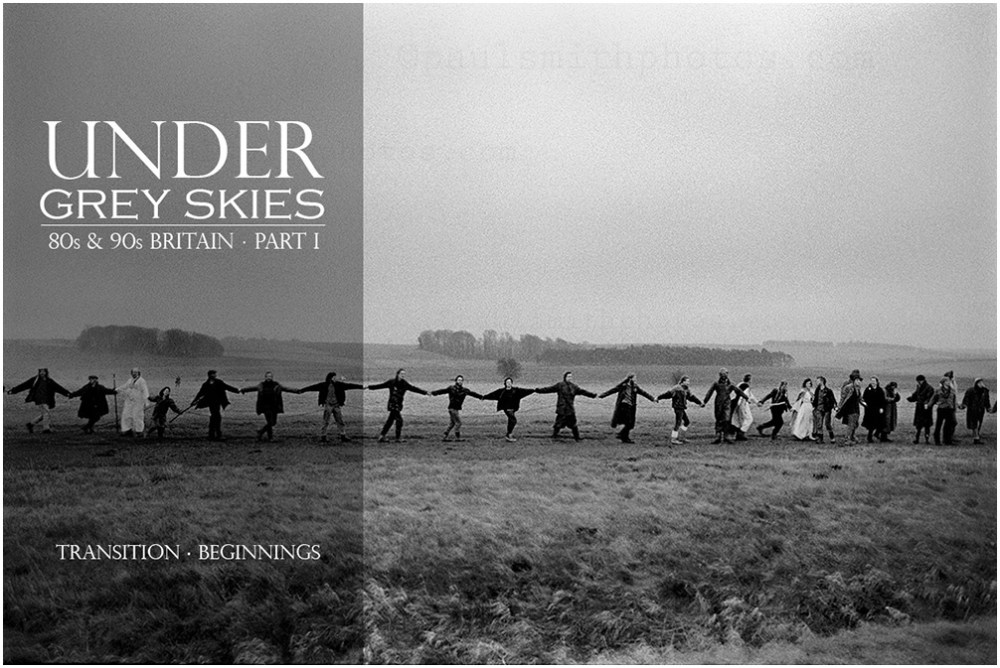
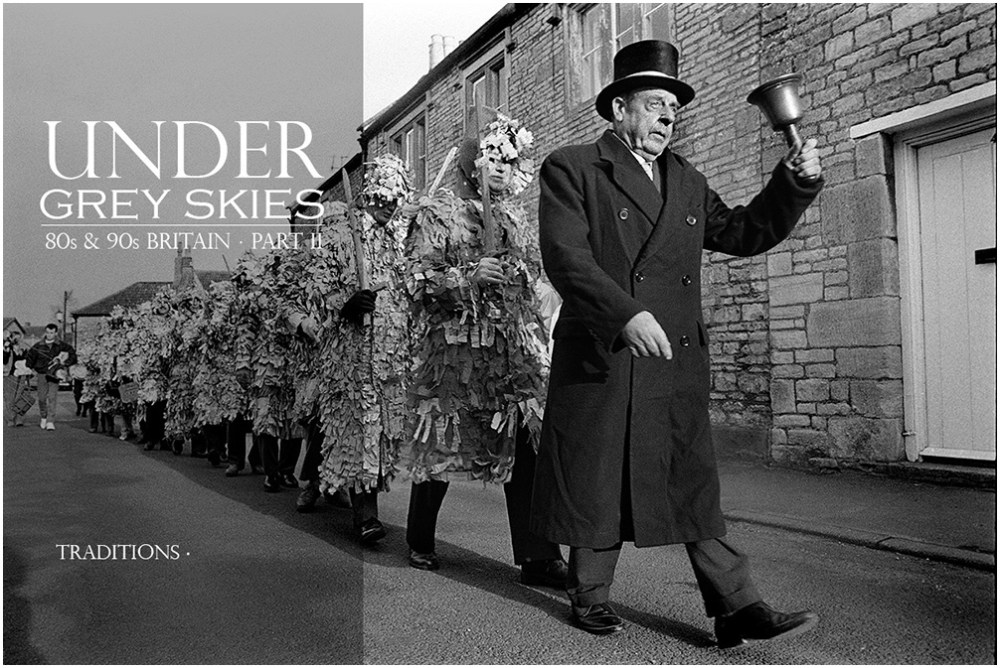
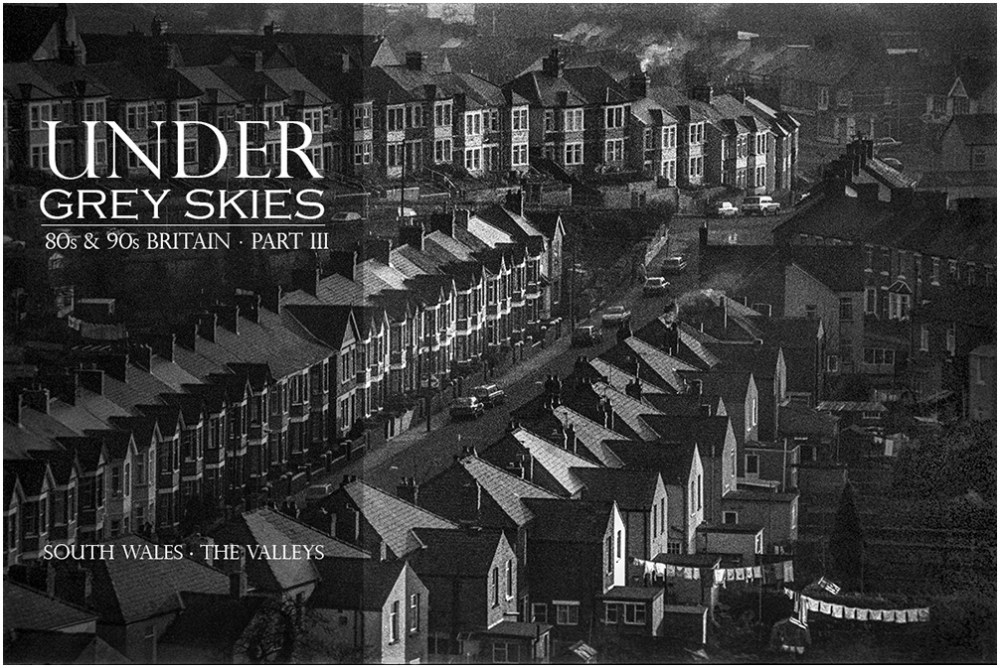
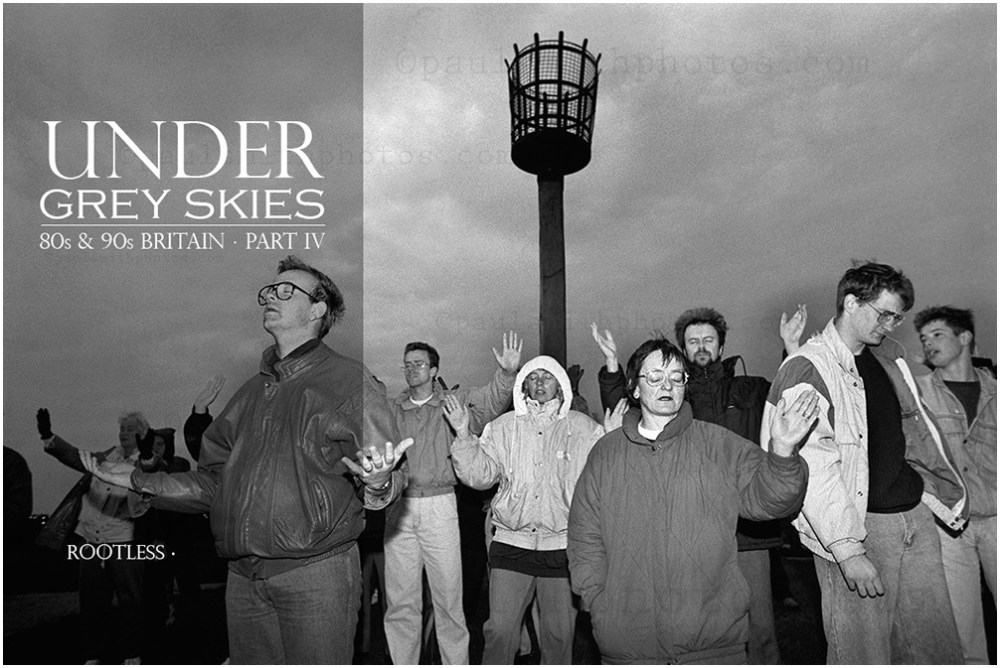
After a couple of years saving my meager Saturday job wage, I bought a Pentax ME Super. Still, the pictures were not particularly good but I would, eventually, begin to take some decent photographs. It would be the camera I would use to take the photos during years of clandestine activism; during my hitch-hiking around Europe; for my hitch-hiking around the UK during the making of my portfolio for university (Under Grey Skies – Beginning Transitions); and the first year at Newport School of Documentary Photography. I finally parted company with the camera at knife-point in the summer of 1988, during a riot at Notting Hill Carnival in London. I chose the wrong side to go and stand when the stones stopped flying.
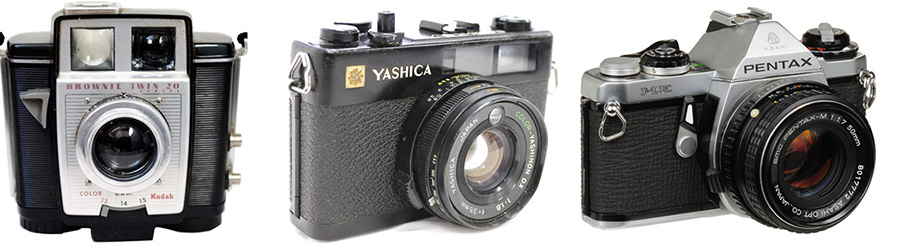
The first cameras: Kodak Brownie Twin 20; Yashica Electro 35 CCN; Pentax ME Super.
To date, I have been robbed of my camera’s five times, mostly at knife-point, but also at gun-point and, rather more embarrassingly, by stealth. A great part of the problem is that I work alone and often in quite precarious situations. Being a loner allows one to encounter the world where the only option is to look outwards and process internally what you see and what you learn. It is the nuances of existence that draw my attention and, I would say, my view of the world and the themes that catch my eye are of little interest and of little importance to the majority of folk.
I prefer to take pictures where there are no other photographers and tend to turn from the themes where the gaze of the media and other lenses focus – celebrities, the arena of sports and particular events and “historic moments” and news themes that cy-clic-ally repeat their way through generations of awards and photo prizes – the worthy of interest according to legacy media and even the media that is succeeding it. I prefer to focus on the peripheries, in the shadows of what is considered of importance. History, despite what we are led to believe, is of the little people in their everyday banalities. For me there is a great satisfaction in photographing those insignificant moments: the pauses; the glances; lost moments; the minor glories and failures; the passing of moments frozen in time. When I finally pass from this earth, I hope that what I leave behind will be of interest to some. However, particularly in this moment of human history, when we are drowning in and consumed by the consumption of images, imagery and “Iamagery”, it is good to recall that, as we are as insignificant as we are ephemeral, it would be arrogant to believe that such as the fascination and obsession of recording our own existence will extend far beyond our own time. Often, I question my role and my worth as “a photographer”. I recognise that photographing has carried me to places I would not have otherwise gone and to know people I would not have otherwise known. Despite this, it has put a distance between myself and where I was, which is why I rarely photograph beyond those other worlds as I do not wish to record and consume my own existence and my own environment. But despite that, I am grateful to those who have accommodated me and had the patience and the serenity to indulge me in my minor obsession of capturing moments in time.
Paul Mark Smith. Medellín, Colombia – February 2026
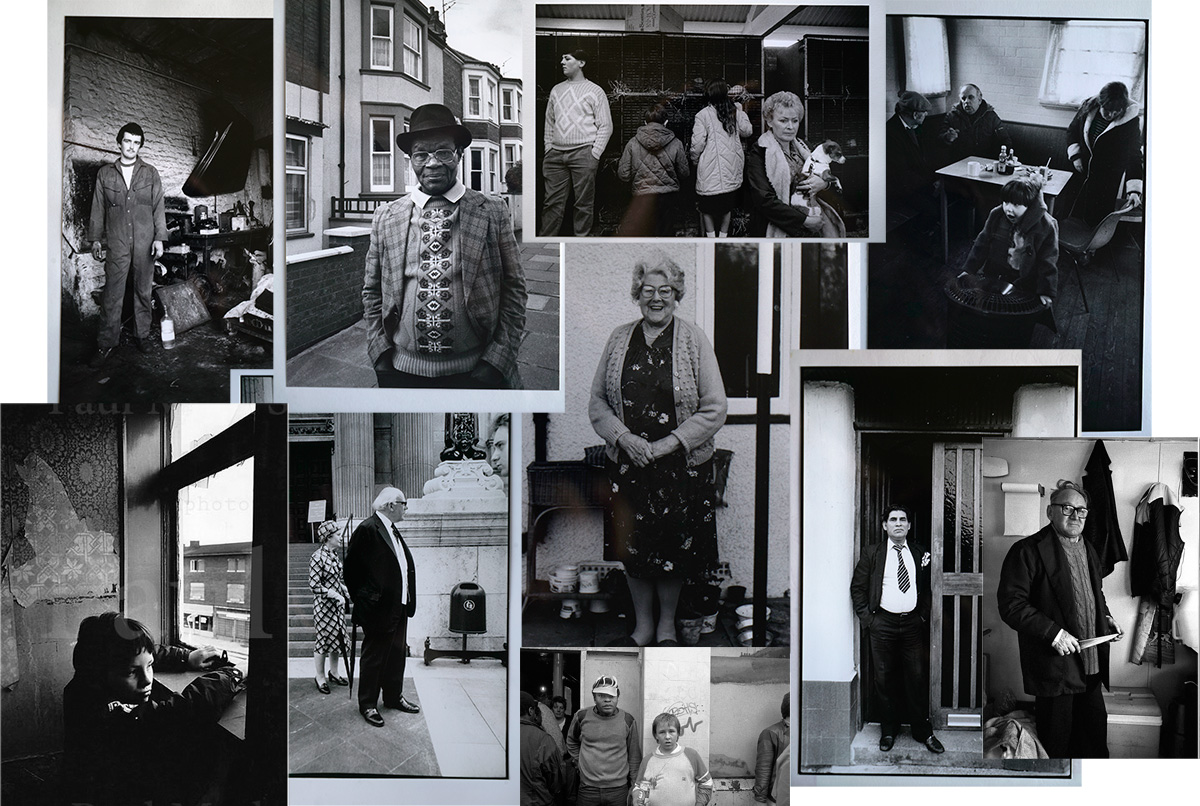
The early pix: Corby, Northampton, Leicester, London 1984-1986

Anti-vivisection protest. (My first published photograph) · Ledbury, Herefordshire · 1985
 Light Notes · Short Tales