
In 2008, I joined the nomadic circuses that traverse the north of the Aburrá Valley through the poorer neighbourhoods, where they pitch-up and perform before moving onto new pastures. The following photographs and text recount some of my travels, travails and moments within the world of the little big tops. This work is a celebration, and also a kind of lament, of a world that is in a slow decline. It was funded in part via a grant from the Becas de Creación given by the Municipality of Medellín that I won, quite fortuitously, at the very moment I was about to give up on the project because of lack of funds.
The Golden Epoch of circus in Colombia was during the 1950s until the 1970s.
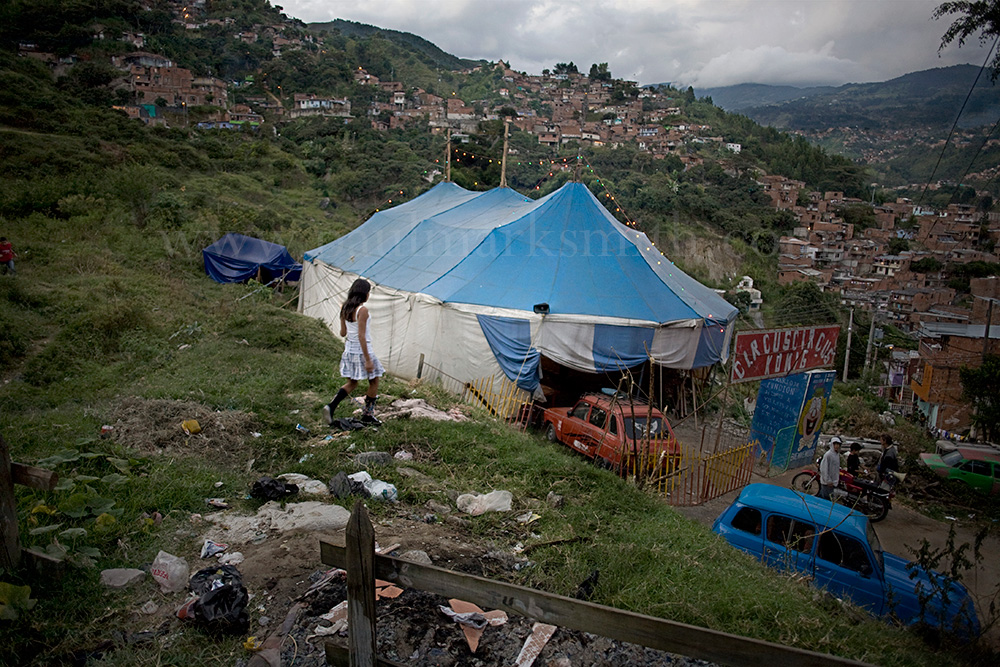
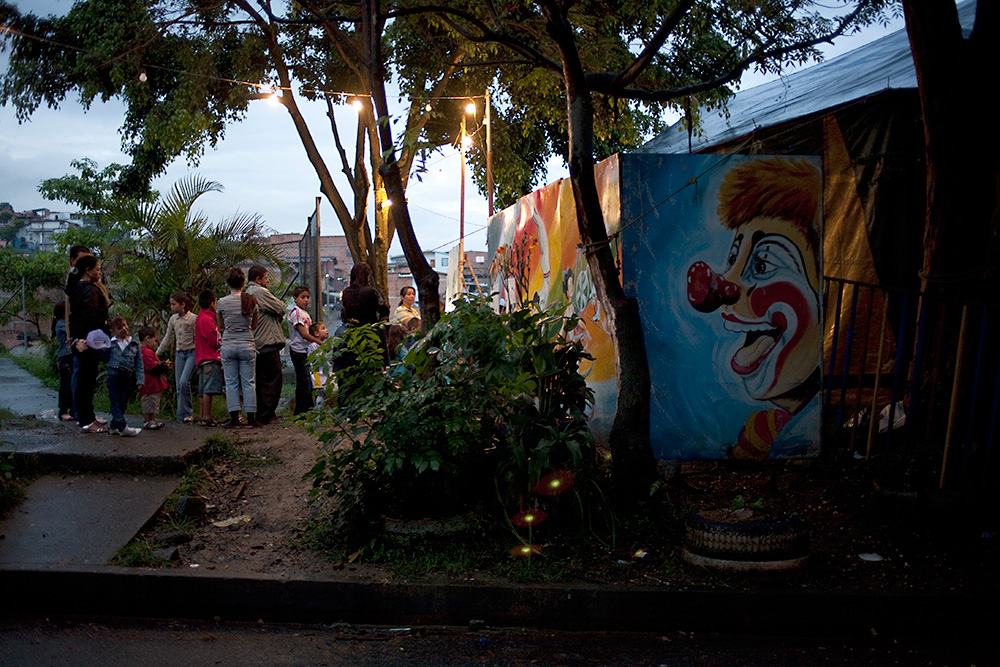
Several small family circuses traverse the poorer neighbourhoods in the north and on the peripheries of the Colombian city of Medellín. Their little big tops pop up from one day to the next in the densely packed barrios populares on rubbish and rubble strewn empty lots and waste lands, often strewn with on rubbish and rubble strewn. The city is a vast conurbation of four million inhabitants, covering an area of 180 km2, nestled in the extensive and once green Aburrá Valley on the western edge of the Central Cordillera of the Andes Mountains. The circos populares (as they are called in Spanish) ply for trade in the densely packed poorer neighbourhoods – the barrios populares – in the northern, central-eastern and central-western boroughs (comunas), where population density can reach as high as 45,000 per km2.
Konig Circus · Barrio El Salado, Comuna 13 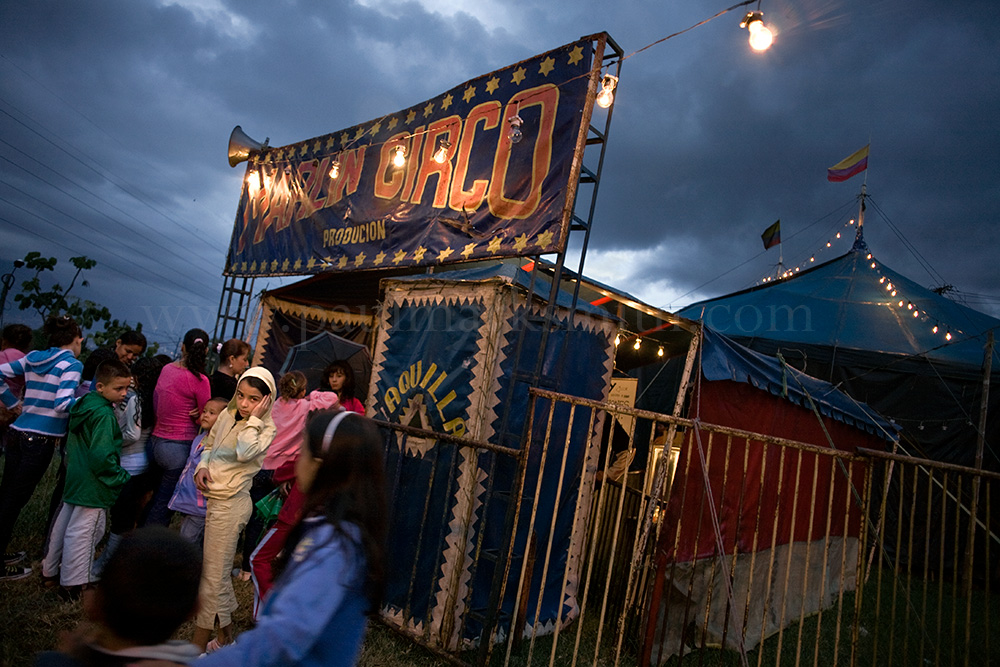
Marlin Circus · Barrio !2 de Octubre, Comuna 6
Text for:
Little Big Top – Colombia’s 50 pence Circuses.
“Thank you for generating employment with your visit. Yours faithfully: Mario Salazar,” reads a notice, handwritten in blue marker pen by the exit of the Jhon Dayer circus. Not many people have read that notice lately. After several weeks of regular nightly rain, public apathy and just plain bad luck Mario and his circus are down to their last pesos. “What should we do then?” he says, somewhat angrily. “Should we go out onto the street and start robbing people?”
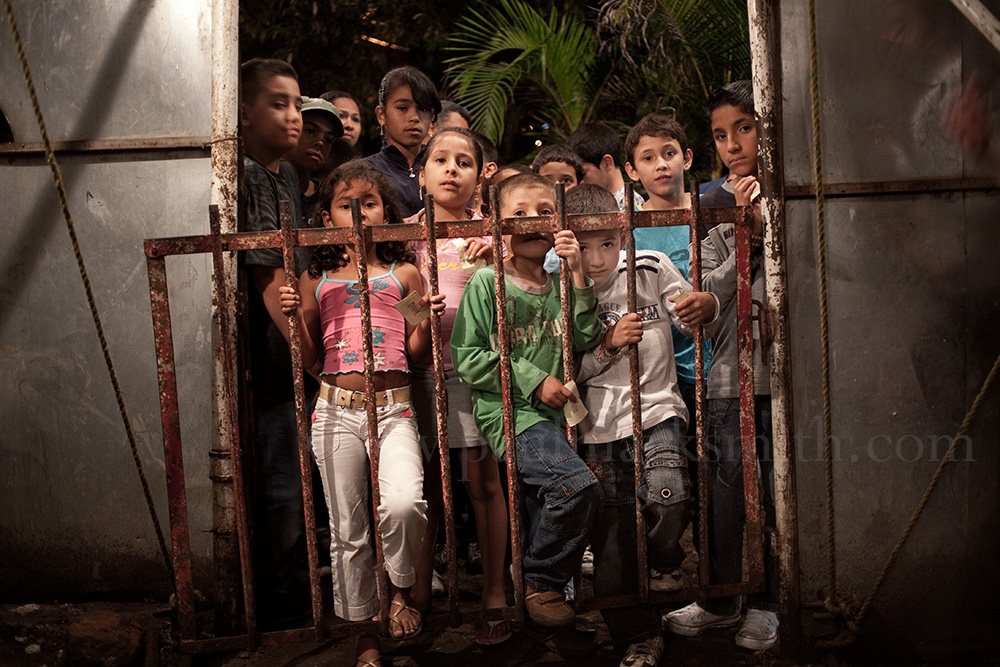
Jhon Dayer Circus · Barrio Bello Horizonte, Medellín 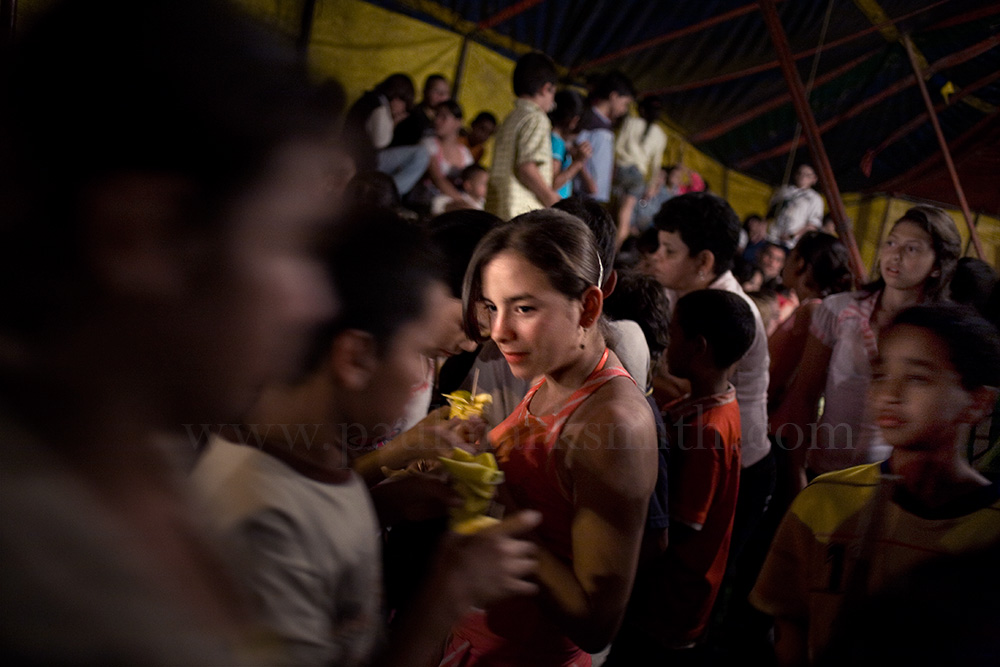
The look · Sombrillita Circus · Barrio Alacalá, Bello
The Jhon Dayer circus is one of around half a dozen family run circuses – circos populares – that ply for trade in the poorer neighbourhoods – the barrios populares – of the city of Medellín. They criss cross the expansive metropolis and pitch their little big tops on the rubble strewn empty lots and on riverbanks in the poorer barrios – those that scale the steep sides of the valley.
One would expect that it would be easy to draw custom in such a densely packed urban sprawl squeezed into the Aburrá Valley, a wide basin on the western edge of the Central Cordillera of the Andes Mountains. . The northern boroughs and those on the eastern and western poles have a population density of between forty and fifty thousand per kilometre square. Part of the disinterest in the circus is Since the apogee of the circus in the 1960s – when all entertainment was live and it was easy to fill the cinemas, dance halls and little big tops – the spectacle of television appeared and then pervaded; then cable; then the internet; and now the new ringmasters are the likes of Meta, Alphabet and Bytedance and we all bow our heads in obeisance to high-definition touchscreens and our own personal bubbles of perception.
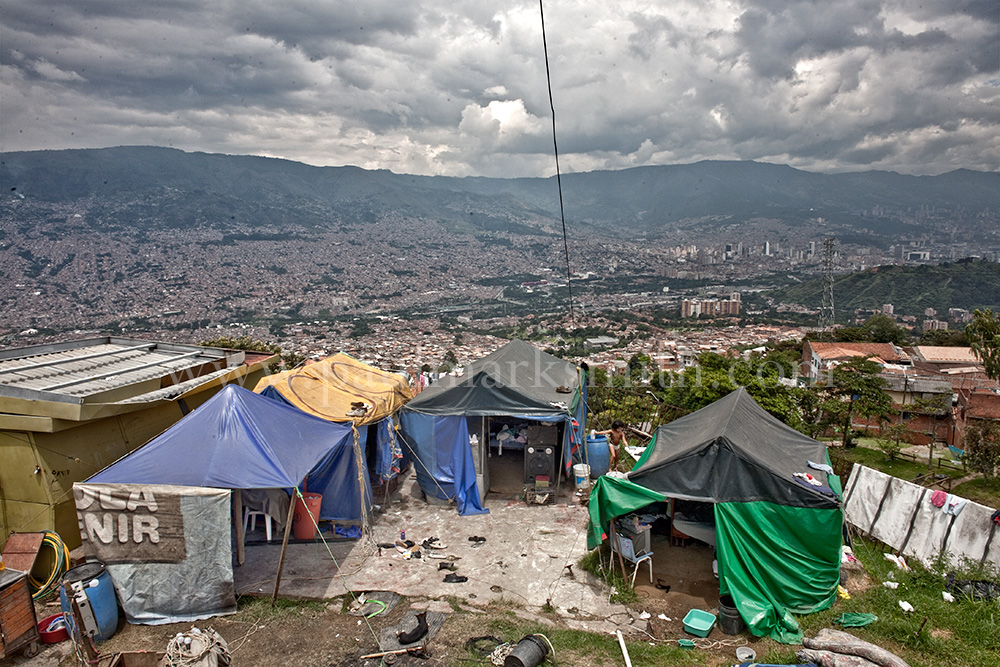
Camarines · Jhon Danyer Circus • Barrio Robledo Aures, Comuna 7 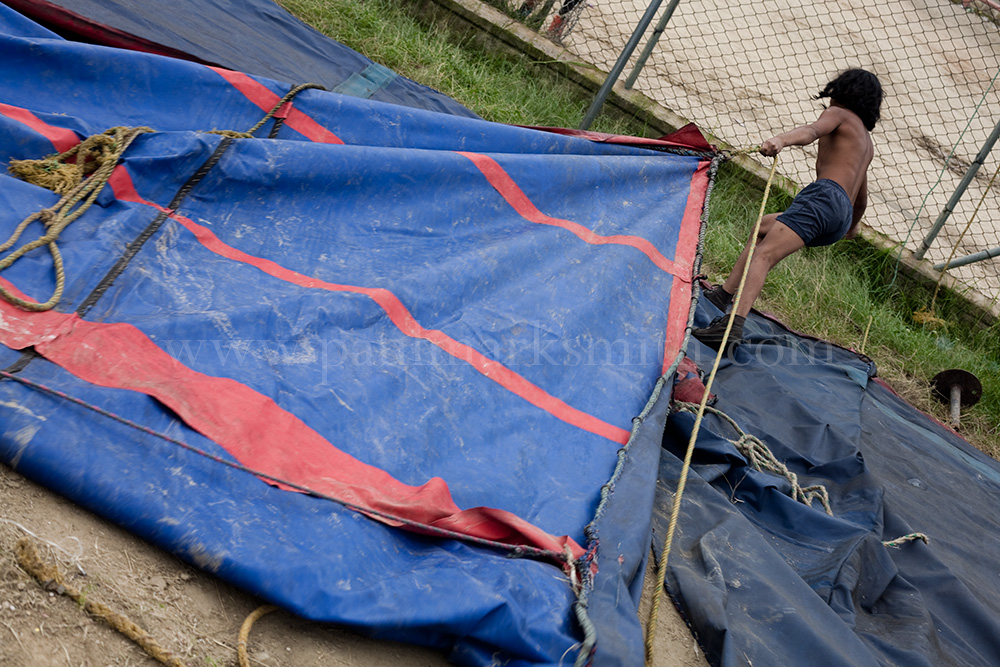
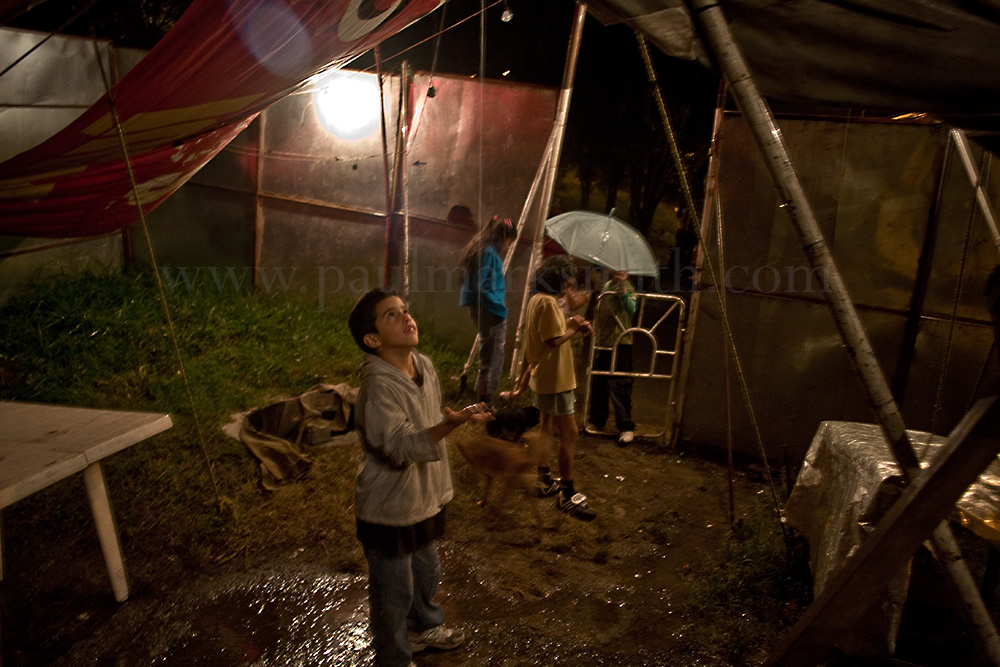
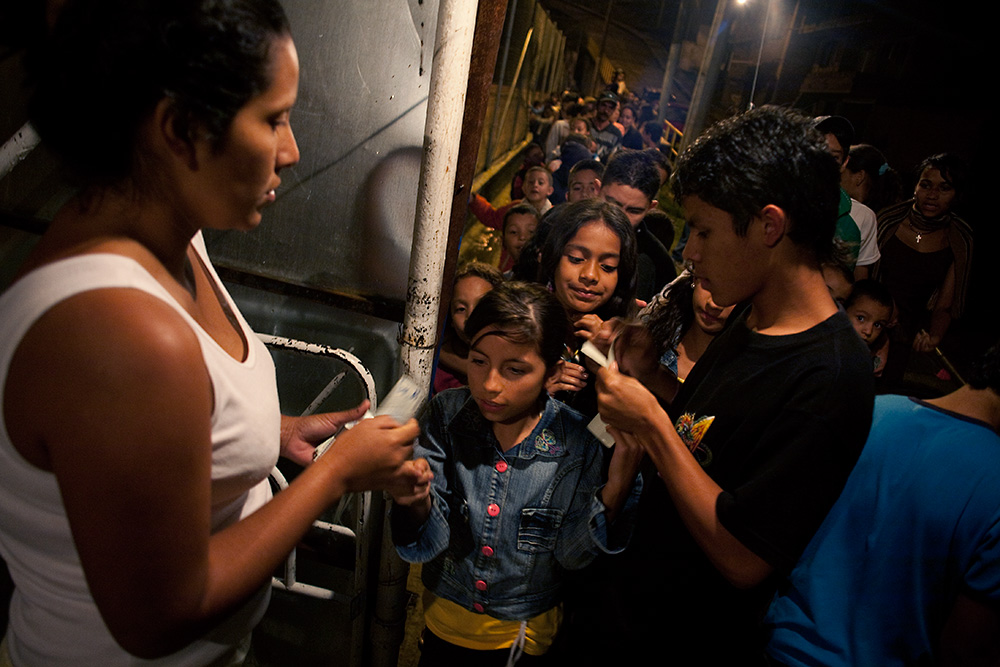
I was back in the circus after a hiatus of a few of months. I had previously abandoned the project with the circos populares but circumstances had led me to return. It was distressing to see that they were struggling so much. I was fond of the folks I had come to know in the circuses and, I felt, they were fond of me too. That night’s 7.30 pm function had been cancelled because the attendance was below the twelve-person threshold. Mario had dropped the entrance price to 500 pesos – less than the cost of a small packet of crisps – when normally it was 1000 pesos for kids and 1500 pesos (50 pence) for adults. At 8 pm, only a father with his small daughter, two dogs and five polite and patient children, who sat squeezed-up together on the front row, surrounded by the dark expanse of empty space.
Mario’s eldest son, Jhon Estiven, performed five minutes of trapeze at the behest of the father and an offer of 2000 pesos. He didn’t want his small daughter to be totally disappointed. Then, the lights were turned off and everyone for their camarines – as the smaller, living tents are called. I was alone.
Jhon Dayer circus · Barrio Pedregal, Comuna 5 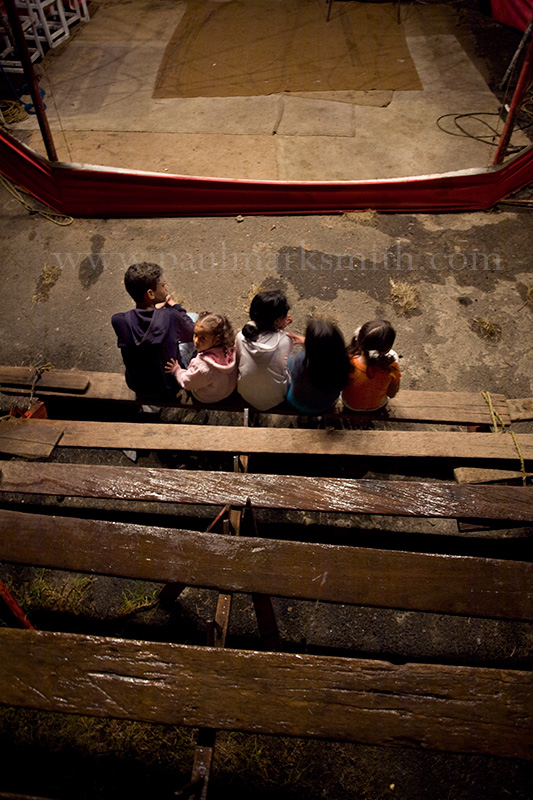
Jhon Dayer circus · Barrio Pedregal, Comuna 5
Outside, the downpour continued. Inside, it was quite dark and silent but from the drumming of rain on the canvas and the drops that came through several openings between the sections. Drips splashed onto the seating tiers, forming dark circles over the span of several planks. Drops made dull thuds as they fell onto sodden earth. A small cascade ran, stuttering into a large puddle that had formed by the public entrance. I was thankful for a moment of solitude. I took in the familiar smells of damp earth, old wood and plastic canvas. Absent was the sickly odour of hot margarine and of heated, popped maize. Absent was the sweet caramel smell of sticky toffee apples. Absent too were the familiar sounds: the chatter and laughter; the rustle of packets; and the shuffle of an expectant crowd. Absent too, thankfully, was the amplified and distorted barking voice of the ringmaster, and that of thudding, repetitive reggaeton. I had missed the circus and was content to be back.
When I was called, I went to Mario’s camarin. It was the most spacious of several that stood that on the ring side of the big top. Over its earth floor, was cardboard and carpet. A large double bed took up half of the space. In the corner was a smaller cot. There were two white, plastic chairs – known colloquially by their brand name, Rimax – and on one side was a wooden wardrobe and shelves occupied by large piles of clothes.
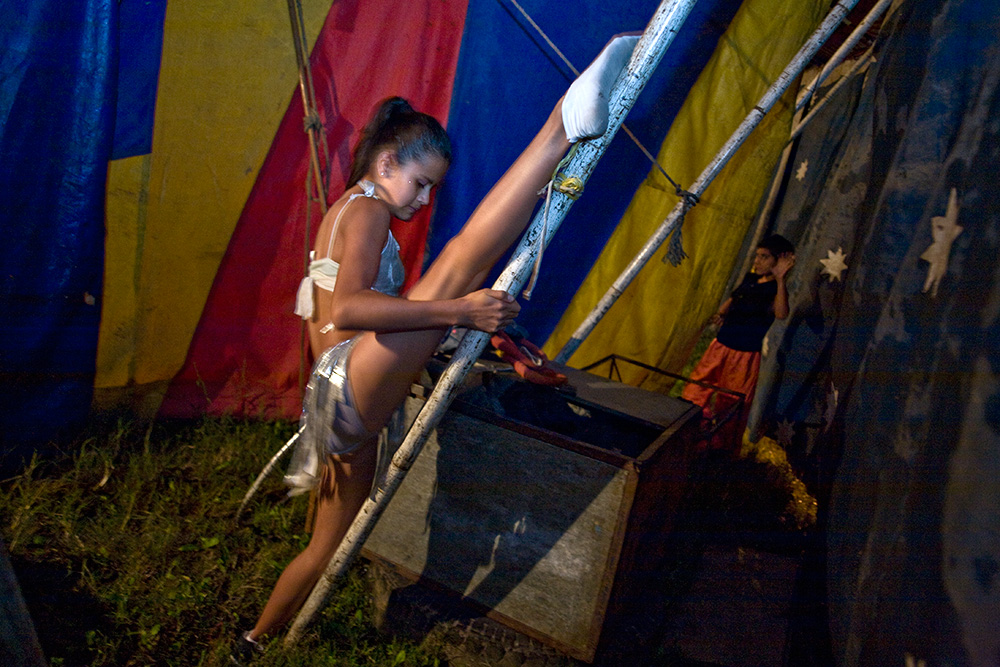
Mario offered me a Rimax and he sat in the other. His wife, Elizabeth, folded clothes and his two youngest daughters, Vanesa (4) and Yesica (2) buried under the blankets on the large bed. The three boys were there too, though they slept in another camarin. They were called the Golden Boys – Los Niños de Oro. The Jhon Danyer circus was named after the three of them: Jhon Estiven (13), Daniel (11) and Yerferson (8). The two eldest were pretty much the backbone of the business. They performed high wire, trapeze, balancing acts and juggling. There was a fierce sibling rivalry between them, driven mostly by Daniel. The youngest did clowning with them and also contortion. For him, the performing was play.
Also present were Luisa Fernanda (14), who performed as a contortionist, an aerial ballet act and, sometimes, clowning, and her sister Karen (12), who sometimes worked in the ticket booth and sold snacks in the intervals. She was an anomaly, as she didn’t perform. The girls are adopted nieces. They had been abandoned by their mother and left with aged grandparents. Though they had been adopted by Mario’s brother, Cristian, they lived with Mario’s circus as Cristian often worker in larger, well established circuses.
Other performers at that moment in time were Raúl and Omayra, who had retired to their tent, which they shared with their two children, Liset (3) and Anderson (18 months). Between them, the couple did high wire, trapeze, aerial ballet, aerial ladder and contortion. Then, there was Henry, an aged clown, who I hadn’t seen all evening.
After a few months, we had a lot to catch up on. I told of my adventures and tale of woe since we had last been together. I had desisted from the circus project when I faced up to harsh reality and recognised that I was spending my time and money on a project that was intended …
for local consumption Various he project was never going to
of a certain disenchantment with Medellín and the recognition that living in such a place and doing such projects as those that interested me had turned into a bit of a debacle. For someone such as myself, it was a tough plaza – as they say hereabouts. I was temporarily homeless and living in a downtown motel called Los Enamorados (The Lovers), as this was cheaper, seemingly more spacious (big mirrors in my room) and, rather surprisingly, more peaceful than a regular hotel. I was about to abandon the city when I was awarded a small scholarship to do the circus project.
I was down on my luck, almost broke, temporarily homeless and living in motel in central Medellín, called Los Enamorados (The lovers). Motels . However, as I was about to leave the city, I won a small scholarship to continue with the project. I thought it strange, as It wasn’t the most was living in a motel had shipped my possessions to Bogotá and
I had found myself down on my luck and became temporarily homeless. I had given up the idea of photographing the circos populares
The circus is named after the Mario’s three sons (Jhon Estiven, Daniel and Yerferson) all of who perform and of whom the two eldest are the backbone of the business. They were known as the Golden Boys – Los Niños de Oro.
There was a lot to tell, as we had not seen each other for a few months. I had been down on my luck and had abandoned the circus project back in June, when I became temporarily homeless. Since then, I had worked on a couple of photo projects outside of the city, where I would stay over in small hotels or wherever fate took me. When I was in Medellín, I stayed downtown in a motel…
been away from the circus for a few months and there was and Mario brought me up to date. Now, there’s not enough money to move on, pitch the big top and trawl for custom in another barrio, and after several lukewarm performances here the circus has lost its appeal: word of mouth says the circus is maluco (bad) and the locals prefer to stay in with the nightly soap operas rather than take the kids out to the big top.
Mario, originally from the city of Cali, has only owned a circus since arriving in Medellín. It was when the Titanic Circus went under that Mario bought the big top from Chispitas – a toothless, displaced clown I had the pleasure to meet long ago. Before Mario had worked in the same circus as his brother, Cristian, but the demise of the Titanic allowed him to go independent and become an owner. Cali was bad at that time and gangs made life more than difficult so Medellín presented a good alternative as the gangs here, under the umbrella of right-wing paramilitaries, had demobilised and were receiving handouts from the government. Also, staying in one city meant the kids could go to school.
Mario rarely performs today – few owners do – and as his children have grown the two eldest have become the core of Jhon Danyer Circus (JDC). Jhon Esteven and Daniel perform balancing acts, the high-wire and clowning, where little brother Yerferson also helps out. The circus carries their names – Jhon Dan-Yer – and they are the “Golden Boys” – or so it says on tin barrier next to the ticket office. Other permanent members of JDC are José Luis, who is the clown Pajarito, and Luisa Fernanda (the contortionist Yasuri) who was practically adopted by Mario and his wife Elizabeth along with her younger sister Karin when the two were small girls.
The world of the circuses is close knit – full of long-time friendships, and mutual friends, as well as some bitter rivalries. But overall it is a world that is relatively open to newcomers if they are ready to pull their weight, which usually means performing, but can also be putting up the big top, doing jobs, the ticket office, selling snacks or whatever else occurs.
“If you eat in the circus then you work in the circus” says Mario. The children of the cirqueros will start learning tricks, often starting as clowns and contortionists before graduating onto balancing and then aerial acts, the trapeze and high wire. Just about everyone can be a clown, or failing that a picador, from whom a dimwit clown get laughs by misunderstanding just about everything they say. The clowns’ routines often use the play between a stupid and not so stupid clown and sometimes include acts where clowns are attacked or attack with knives or pistols. Such familiar themes are not rare and so not so scandalous in the barrios of Medellín.
Mario’s circus has had a bad run of recent. In fact there has been an air of tragedy surrounding JDC which began when the knife thrower, Cristian (known as Taca) left after his adolescent daughter was killed in a motorcycle accident. Following his departure, the rain and bad plazas (a good plaza is when many people regularly attend) had left the circus empty most nights earlier in the year. Then the high-wire artist, central to the performances, was sent packing after he tried to sexually assault the 14 year-old contortionist whilst in a drunken stupor. His presence in the circus was sorely missed, as was that of his trapeze performing wife, who was greatly shamed by the incident. More bad plazas followed, and then they found themselves surrounded by scandal when they encountered Juan Fernando in the barrio Maruchenga. He murdered his 15-year-old ex-girlfriend and her newborn of 35 days and it suited the sensational press to call him the “Circus Assassin” rather than call him the “Maruchenga Murderer”. Mario’s circus left the barrio under a cloud as the gossips thrived. Things could surely get no worse!
With so many potential clients packed into such a tight space, one would expect that they would find it easy to find custom. However, times are hard and many circuses have gone under, while others still struggle to survive. Times have changed and people have changed with the times since the apogee of the travelling circus in the “golden epoch” of the 1960s.
There are several factors that contribute to the attrition of audiences. In the 1970s, televisions began to pervade and predominate; then, multi-channeled cable TV arrived and made itself indispensable for many; and that was followed by the internet and then the smartphone, which consolidated the virtual monopoly on entertainment and distraction. With such a plethora of entertainment on offer, the public has also become a little more discerning.
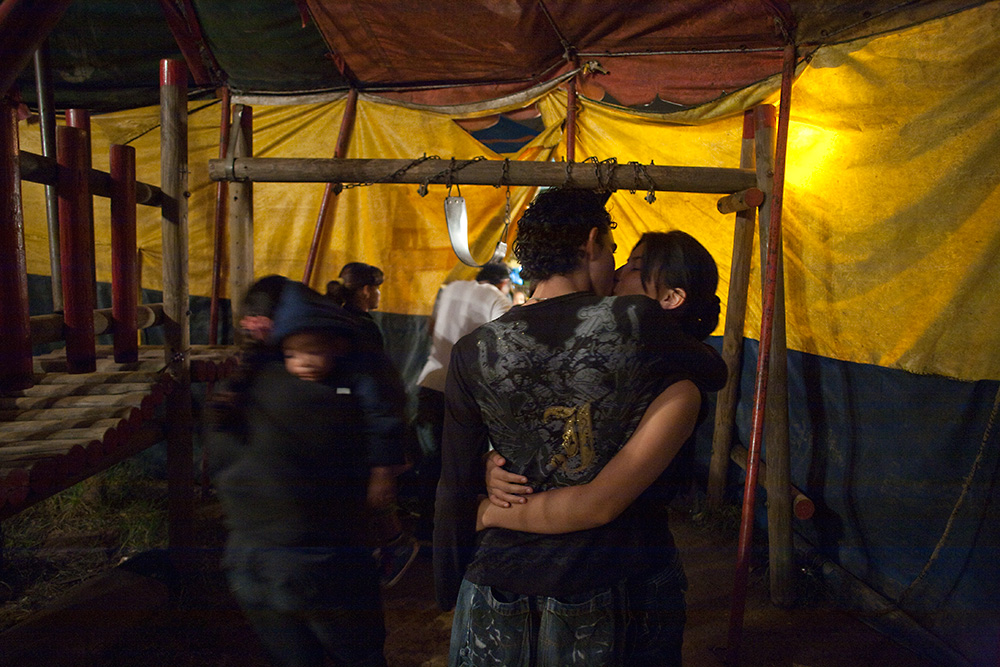
(Above) As a communal event within the neighbourhood, the circus offers a opportunity to come together, see and be seen. Here, an adolescent girl exchanges glances with a boy during the interval while both snack on mango biche – a bitter green mango served with lime and salt.
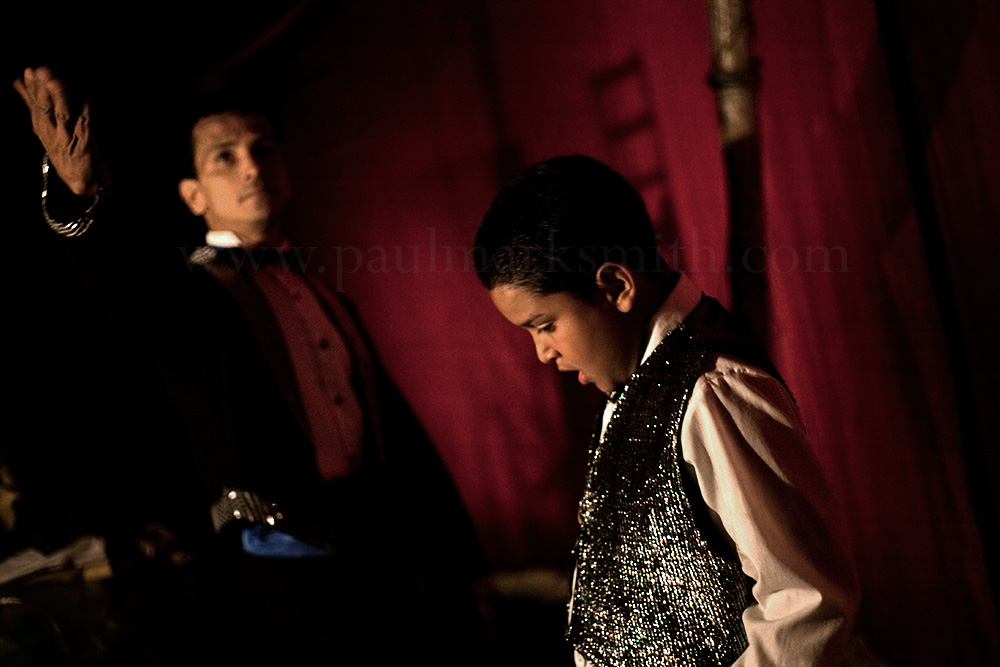
Marlin Circus · Barrio 12 de Octubre, Comuna 6
(Above) Walter and his son Anderson wait backstage shortly before going into the ring. The pair perform unicycle, juggling and balancing acts. They do not travel with the circus but live in a house in the city and perform when invited. Because of the quality of their act, they are paid well and only perform to capacity crowds.
Many of the circus acts are little rough around the edges, but for many of us, that is part of the charm. Nowadays, the new ringmasters are Meta, Alphabet and the like, but theirs is far from that of the collective world found under the canvas. Under and in the embrace of the little big top, waves of awe and laughter wash over you and vibrate through your body and soul. The odour of popcorn and of toffee apples, of old wood, of sawdust and sweat swirl about you and marinate future nostalgias into your being. Such things are a universe away from the obeisance of bowed heads before high definition, touch-screens cradled in our outstretched palms under the spell of which we increasingly live. Given such a paradigm, it is difficult to hold faith that the live spectacles of the nomadic circos populares will somehow survive.
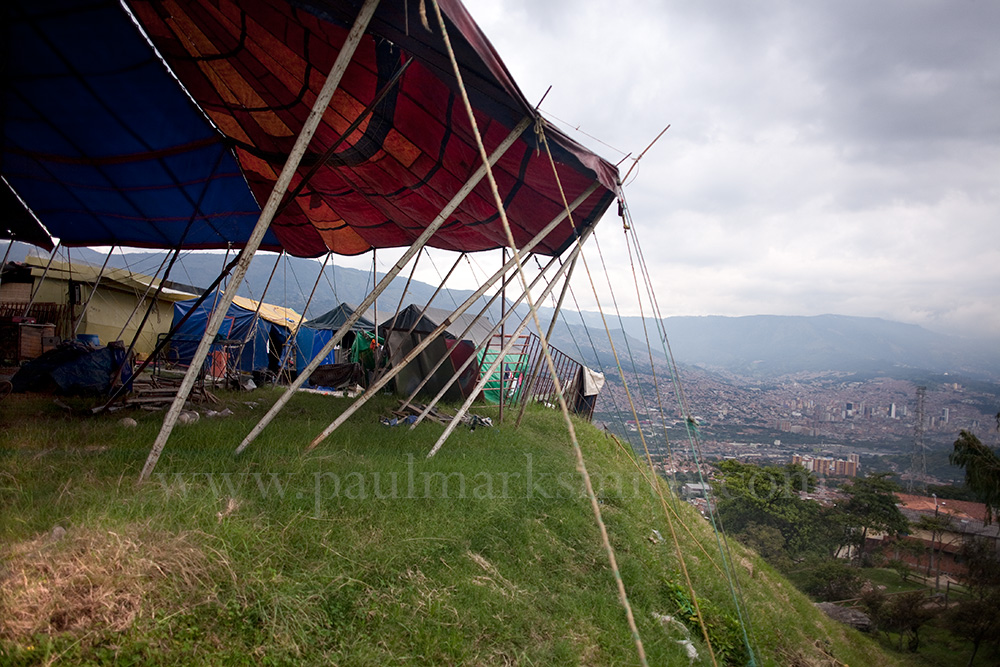
(Below) A view towards the city centre and the south of the Aburrá Valley from the Aures neighbourhood, high in the central-western part of the city.
(Above) Daniel and father Mario Salazar.
“Whoever eats in the circus works in the circus,” scolded Mario Salazar. He was telling off one of his three boys; or perhaps one of his two younger daughters; or perhaps still one of the two girls he and his wife, Elizabeth Cortes, had taken under their wing when the girls were abandoned to the care of aunts and uncles nearly a decade since. It was an ordinary and unremarkable family spat that lasted as long as a higgs-boson. I did make a note in pencil, but that notebook disappeared months later on the other side of the city, along with my cameras and laptop, in a drizzling rain on dark street stood before a steel blade that glinted the orange light of a distant and dim sodium lamp.
To whom the jibe was directed wasn’t so important as the comment itself, which encapsulated a feature of the family circuses I had come to know over the previous months. The circus world is quite transient. People come and people go but while they are there, they are required to pull their weight.There was a tent to erect and a tent to bring down, and there was a show to put on once, twice or, occasionally, even three times per day.
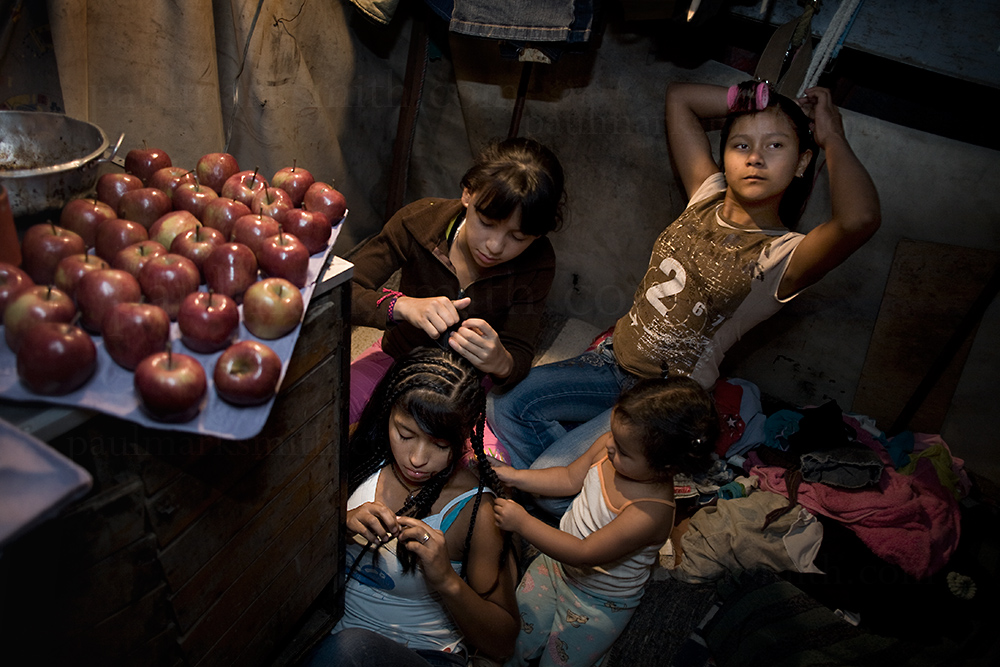
Jhon Dayer Circus · Barrio Belén Zafra, Medellín
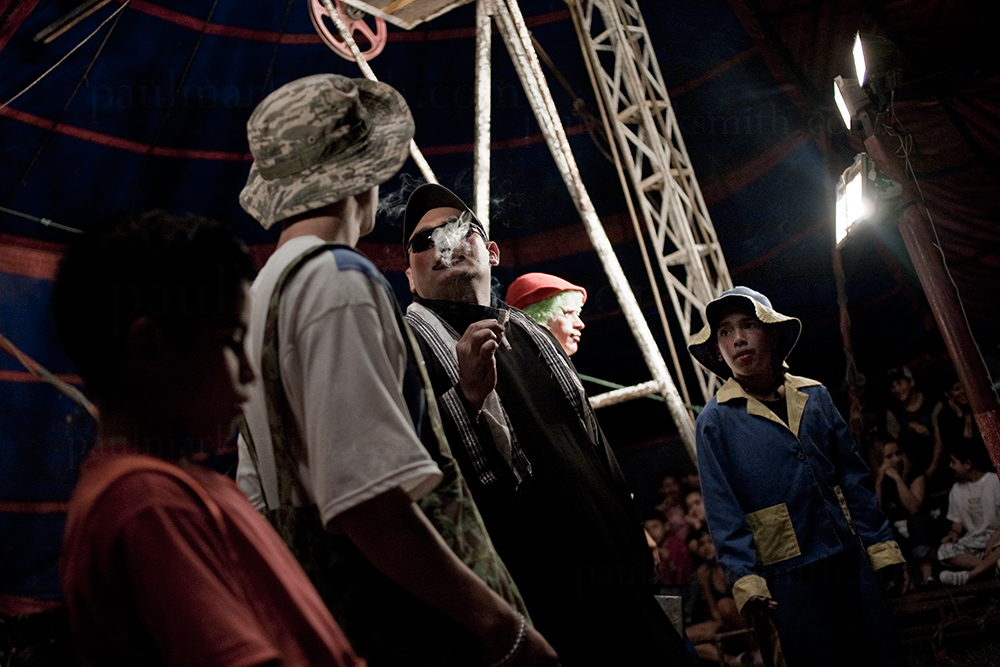
Jhon Dayer Circus · Barrio Miramar, Medellín 
Jhon Danyer Circus · Barrio Pedregal, Medellín
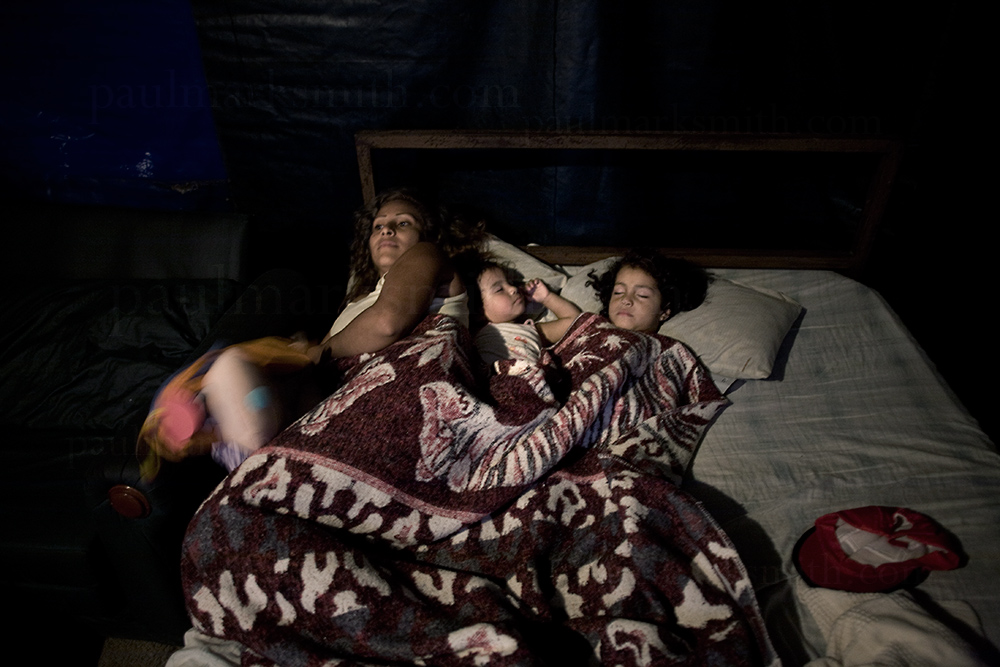
Jhon Danyer Circus · Barrio 12 de Octubre, Medellín
When Mario made the comment, I did feel a little sheepish, as my rice was full of rice and beans. Was I pulling my weight? Technically, I wasn’t. Nothing I did really helped with the functioning of the circus, yet I had been been accepted in. “Not you,” said Mario. “You’re different.” I smiled a lippy grin as the rice and beans pushed out my cheeks. My hanging out, chatting and listening, and taking pictures was acceptable behaviour in the run of things. It probably helped that I would bring contact sheets and small prints of the photographs from previous visits to share with them what I was up to and leave as gifts.

Crismar Circus • Barrio Independencias, Comuna 13, Medellín 
Cristián and Snowball Crismar Circus • Barrio Independencias, Comuna 13, Medellín
Had I been sleeping over in the circus, then it would have been very different. I knew that much, as I had become temporarily homeless a few months earlier after starting the project with the circuses. I ended up staying in a small motel called “Los Enamorados” (The Lovers) in the city centre, where I would pay for an “amanecido”, which literally means waking up the next day, rather than by the hour. In a city and culture where most folks live in close proximity with parents, grandparents, siblings, aunts, uncles and cousins – often sharing houses and apartments, sometimes sharing rooms, and even sharing beds – a motel is where one goes to be a little more intimate with a girlfriend/boyfriend or husband/wife without causing a scandal, humiliating oneself or one’s cohabitants, or traumatising minors. It cost me less than half the price of a hotel – I did extensive research on the theme – the plasticky mattress didn’t bother me so much, the mirrors made the room feel quite spacious, and my room was secure and relatively well soundproofed.
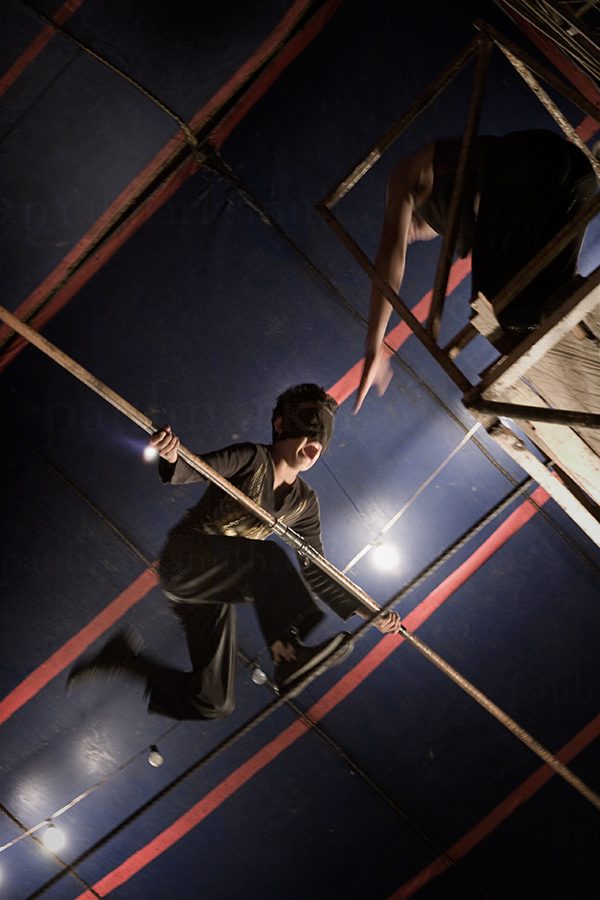
Jhon Danyer Circus • Barrio Bello Horizonte, Medellín
When I returned to the circuses after a short hiatus – during which I worked in the Middle Magdalena region and Urabá investigating atrocities committed in the armed conflict and forced displacement – I told Mario about my temporary homelessness. He told me off for not letting them know, as I was “practically family.” Thankfully, I had by then solved my housing situation, as the whole bunch of them then proceeded to speculate and joke about all the ways they could integrate me into the functions. Most of these involved me as an adornment or a victim of some stunt or gag.
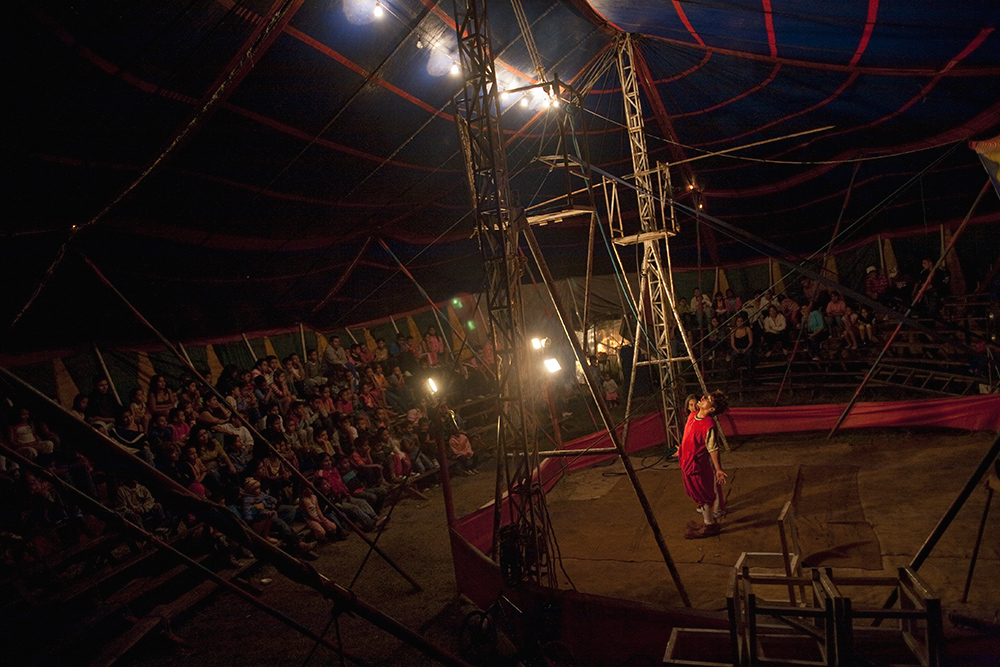
Jhon Danyer Circus • Barrio Robledo Aures, Medellín 
Jhon Danyer Circus · Barrio Pedregal, Medellín
The Daring Danger Circus.
Mario’s circus was called Jhon Danyer. For months, I thought it was called “John Danger” – quite and daring and cool name I thought, until I saw it written on a large sheet of paper by the entrance, announcing special functions and give-away prices to draw in the punters when thing were going rather bad. The name is a conjugation of the names of his three eldest sons – Jhon Estevan, Daniel and Yerferson – of whom the two eldest were the backbone of the circus, along with Luisa Fernanda, the eldest of the adopted daughter who was Yasuri the contortionist. The younger adoptive daughter, Karem, would sell packets of popcorn or work on the door, but no one could pressure her into performing. She was painfully shy.
Other acts would come and go. I would come across most of them in other circuses. These “freelancers” moved with the ebb and flow of the functions. When times were bad, they would be looking towards fresh fields and go and visit the other circuses to see if there were openings. If the circus was in a bonanza, then they would attract the better, more polished acts, which included the semi-nomads (a label I coined and use exclusively) who were circus acts that lived in houses and were invited or tempted to perform when territory was abundant with circus goers. Most of these acts were really quite good – they rehearsed and polished their skills, which was very apparent when they performed.

Jhon Danyer Circus · Barrio Miramar, Medellín 
Vanesa gathers Taca’s knives Jhon Danyer Circus · Barrio Miramar, Medellín
I observed that the tendency amongst the nomads, who lived in the camarines – the smaller residential tents – and moved with the circus, was to not rehearse so frequently. Jhon Estevan and Daniel were an exception to this tendency. (Yerferson was too small to say, as it was all one big game for him). Part of their dedication was driven by sibling rivalry. Daniel, who was younger than Jhon Estevan by more than a couple of years, was particularly driven by the desire to catch up and surpass his brother. Even in the portraits I made of them with my old analogue Mamiya C-33, Daniel would try to pose larger or raise himself as high or taller than his brother. He had all the makings of achieving great heights in the circus.
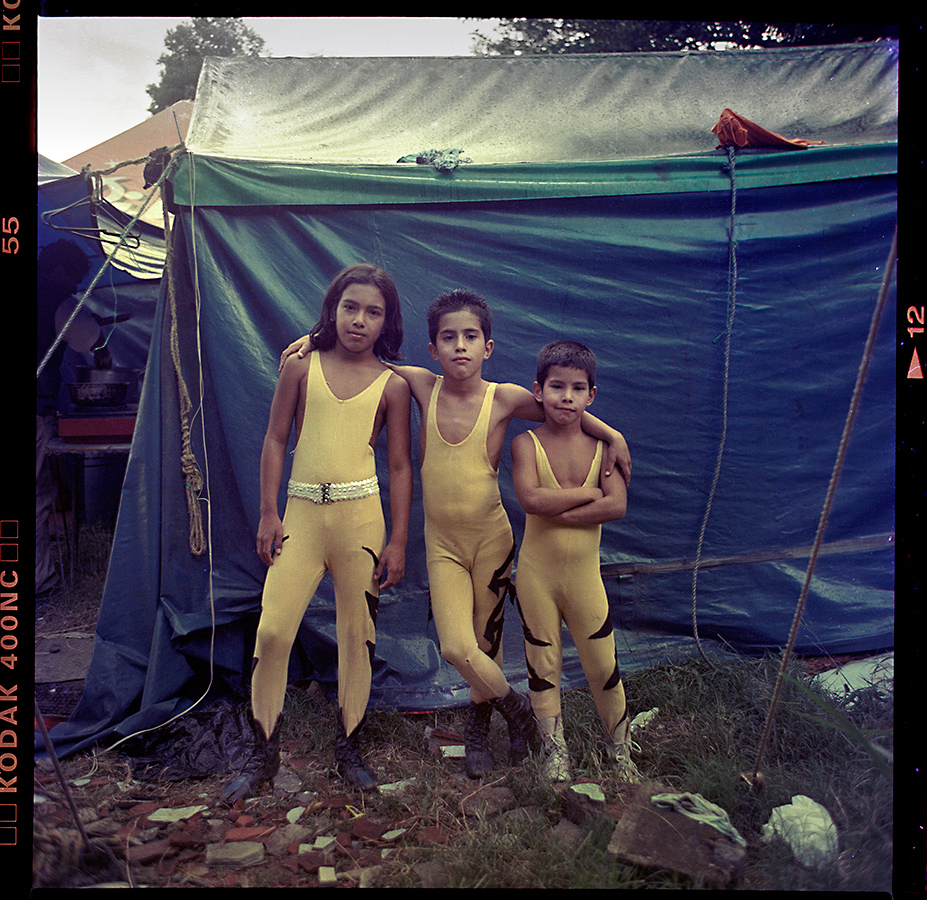
Jhon Esteven, Daniel and Yerferson · Jhon Danyer Circus . Barrio Pedregal, Medellín 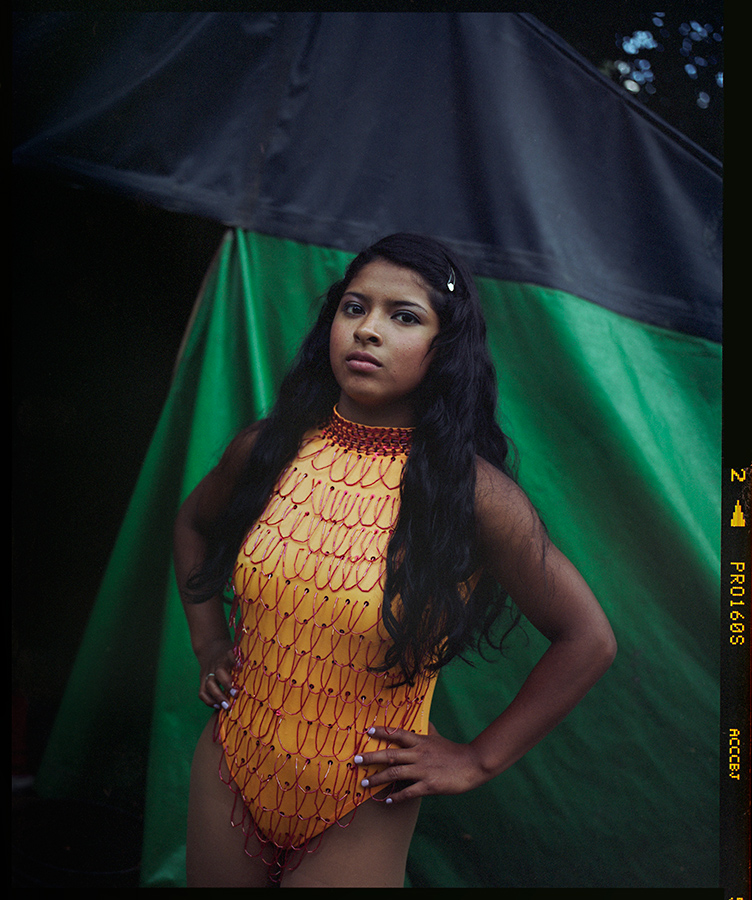
Luisa Fernanda (Yasuri) · Jhon Danyer Circus . Barrio Pedregal, Medellín
The Road to Mulukuku
The had first attended a popular circus (circo popular), as the little big tops with their empirical performers are called, in the city of Medellín some years before. However, I had been struck by the precarious existence of these some years before that, when I had encountered a small circus that moved around the Nicaraguan countryside by hitchhiking between pitches. With them, they carried their luggage of rolled up canvases tied with ropes, poles, planks and other circus paraphernalia. I too was hitch-hiking, but in the other direction. I had lot less luggage. Our mutual circumstances and the solidarity of travellers made chatting easy to start and maintain. They we amused and perhaps a little flatted at how amazed I was that they travelled so and with so much stuff. I picked up a ride rather sooner than I had expected before I had had time to process the chance encounter. I was playing with the idea if it would be feasible to tag along or track them down at some later date. Everyone’s priority was to get a ride away from the dirt road y-junction. it would have been rude to decline. The circus folks helped me and my bag onto sacks of red beans on the back of a truck and I set off for the hamlet of Mulukuku and beyond to my final destination, the gold mining town of Siuna. I watched the waving figures through a cloud of thick dust kicked up from the road and lamented parting so quickly. When they had disappeared from view, I made a mental note and told myself that one day I would join the circus.

Yasuri · Jhon Danyer Circus • Barrio 12 de Octubre, Medellín 
Jhon Danyer Circus • Barrio Miramar, Medellín
Quite by chance, Mario had bought the circus that was the first I had visited in Medellín a few years earlier. Back then, it was called the Titanic and its owner was Crispetas (Popcorn) and somewhat toothless clown who, I thought, liked his drink. The Titanic had gone under and Mario had bought the tent canvas, poles, planks, ropes and other circus paraphernalia from Crispetas. He renamed the circus Jhon Danyer after his three sons Jhon Steven, Daniel and Yeferson. (For months I thought it was called John Danger circus, which I considered a pretty cool name!) He and his wife, Elizabeth Cortes, also had two younger girls – Yesica and El. I never did ask if they had even considered changing the name to accommodate the growing family.
The search for the Titanic
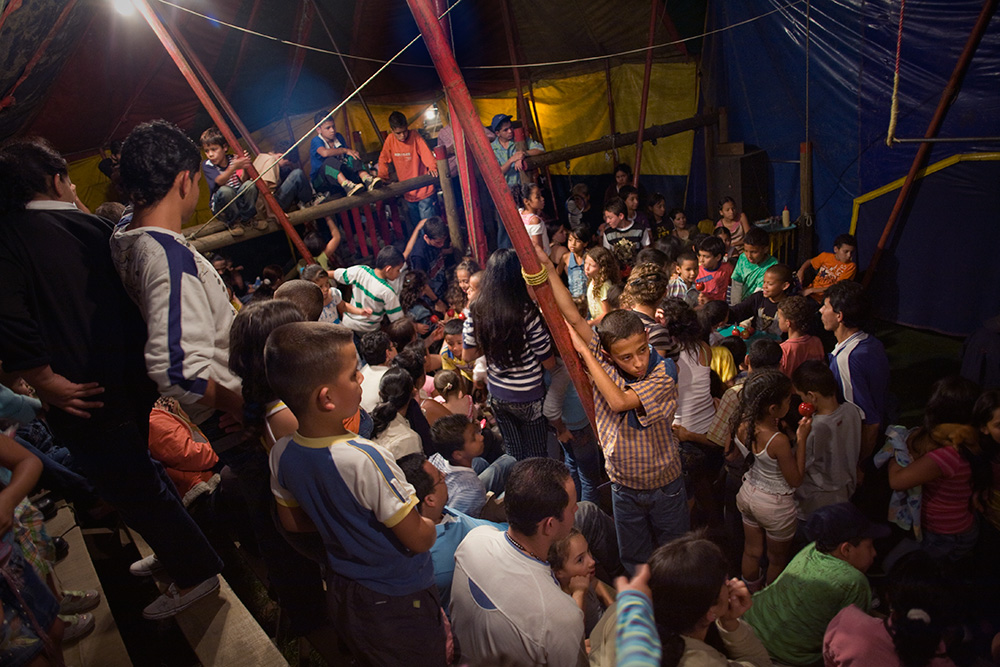
I had first found the Titanic on a stoney beach, half-way under a road bridge that passed over the Iguaná River, to the west of central Medellín. The first performance I saw there was fantastic. The performance was packed. It was an agglomeration of humanity that laughed, shouted, screamed, jostled, applauded, cheered and flowed with joy throughout. So many people were present that children spilled into the circus ring. The unified mass of their bodies bubbled, boiled and squealed as they scuttled out from under the feet of the clowns strutting and circling through their slapstick routine. Hundreds of mouths gaped and gasped as fat bellied Gilberto swallowed broken light bulbs and smashed broken glass against his bare skin. So close were the crowd and so tight the space, we felt the air heat as he spat fire, as both blood and sweat oozed from the pores of his ample flesh. The compacted crowd watched in awe as small skinny girls stood on their hands and then on their elbows and forearms and twisted themselves into knots. They marvelled in silent admiration as a slim woman hung from hoops and “danced” a delicate and deliberate ballet.


It was the communal experience that made the performance so memorable and so captivating. The smell of plastic canvas, damp earth and old wood, mixed with sweat, body colognes and kerosene. And, the roar of laughter, the murmur, the collective gasps and shrieks, slapstick music and the amplified and distorted barking of the ringmaster. At the end of the performance, excited chatter streamed out of the tent and into the streets like the water that bobbled in the over the stones in the river beside us.
I returned to the Titanic to talk to Crispetas and ask to photograph a performance. Crispetas was an affable man. He introduced me to some of the performers. Fire spitting, glass eating Gilberto was a quiet man in his forties with a big belly. He had come across the circus when it came to his barrio and when it left, he left with it. The aerial ballet dancer, María, was also a contortionist, as were her four young daughters who were born of four different fathers. The slim and sanguine María had fled from the armed conflict in Urabá on the Caribbean Coast, where civilians of humble origins were the principal victims of the territorial control exercised by the Colombian Army and their right-wing paramilitary cousins. In the circus, she and her kids had found a home and a modest income.
I returned to photograph a performance, which didn’t quite have the same intensity as the first I had attended. When I returned within a couple of days to gift them some small photographic prints, the Titanic had disappeared and no one seemed to know where to.
Jhon Danyer
My search for the Titanic came to an end rather undramatically. I was chatting with Mario in the big top and mentioned that I was keen to find the circus that had first inspired me to start this project. He looked at me and said “You’re in the Titanic’s tent at this moment.” I gaped a little and then laughed – “No way!” He then explained to me that the Titanic had gone down and he and bought the big top tent, poles and ropes from Crispetas who had since disappeared, or sunk, if you prefer, without trace.
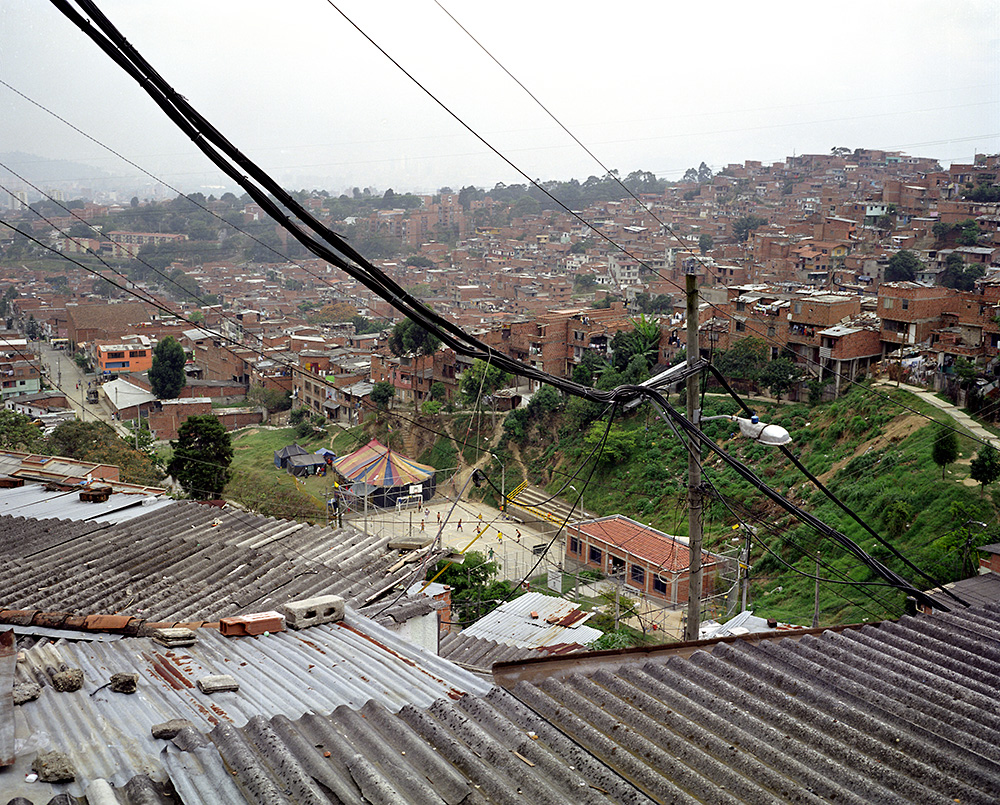
Independencias III · Comuna 13
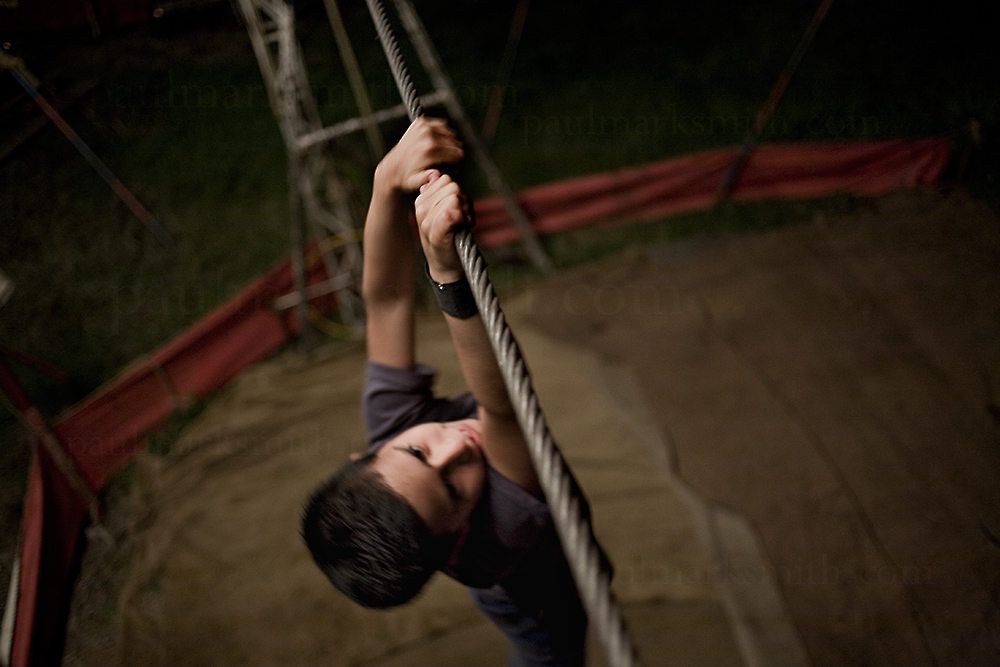
Jhon Danyer Circus • Barrio Bello Horizonte, Medellín 
Jhon Danyer Circus • Barrio Bello Horizonte, Medellín
Mario wasn’t from a circus family, though his brother Christian was a rather good circus performer. It was he who had directed me towards Mario’s circus. Mario’s wife Elizabeth was from one of the principal circus families in Medellín. She was a Cortes. The other family was the Pacheco. There was some hostility towards Mario from a certain sector of the circus world, which was probably aggravated by Mario not being from Medellín nor the Department of Antioquia but from the country’s third city, Cali. The Antioqueños can be very regional and particularly hostile and even treacherous when “outsiders” start competing in the sphere of labour and business. It had certainly been my experience since moving to the city.
- tell of bohemian type girl in a bar called the Guanábano who I showed the prints to and was told “Why are you doing a job that some one from here could do?! Not that mine is a job. But you get the idea.
Link to the survival strategies – how I identify with this – constantly inventing and facing up to the vagaries – the ups and disappointments, the small victories and the more numerous falling flat on ones face and the rejections. In one moment of frustration when the coffers were empty and they were staring failure in the face, Mario blurted out “What should we do! Start robbing people in the street!”

Jhon Danyer Circus • Barrio Belén Zafra, Medellín
This part to describe the interest and fascination with the small circus – a certain romantic notion – and still a knowledge that I would be romanticizing it – that their routines and world is much like ones own – of those of us who are not born of privilege and have to have survival strategies – find the way to keep our heads above water. How I was fascinated by the itinerant off duty clowns and tightrope walkers on the road from Mulukuku – with the fire-spitting glass eating Gustavo and the refugee contortionist and her four little girls, like a large set of unpacked Russian dolls – how my hesitation and procrastination. Losing the Titanic was a blow – but found other stories of people with dreams and survival strategies, as I did in Mulukuku – worlds people wished to escape and others who were easy with their lot – and amongst the gold diggers of – but these are other stories, which you’ll find clicking around the site.
I sometimes forget that I am a photographer – much of the time one withdraws to try to let things carry on as if one were not there rather than constantly asking questions, one just hangs out. As I snap the pictures, I take in the anecdotes and watch the others unfold over time… Rather than write them here, I can share these as long, or just not so short captions with the photos
Please give feedback – congratulations for being one of the very few people to have reads so far… blah blah
The main impetus behind my circus project was that I was that I inquisitive to learn about the dynamics of these informal circuses, see how they managed. I have always been fascinated by the “survival stories” of others. Their stories are like ones own. On the surface, the circus is an exotic world, but at its beating heart are folk just like oneself. The routine of the same performances, of the same gags and selling the same mecato (snacks and sweets) are similar to the cyclical day-on-day turning up to the office or the factory.

Sombrillita Circus • Barrio La Gabriela, Bello
Every time I would see a little big top nestled amongst the the chaos of the barrios as I passed by in a bus or on the metro, they would remind me of mushrooms that pop up overnight in the fields of on the forest floor. And they would disappear quick too, moving when they exhaust their sustenance.
is born out of a recognition that we people are not so different – at least the majority of us that are not born of wealth and privilege and who must find ways to keep our heads above water. The loss of the Titanic was a blow to me. I was fascinated by Gustavo’s real story – the cliched one of running away to join the circus – and the story of the refugee contortionist and her five contortionist daughters and the affable and tipsy owner-clown, Crispetas. Of all the circuses I attended during my project, Mario’s was the one that seemed to have the worse luck. I will
The Danyer circus Times were hard and sometimes two or three days of circus functions didn’t happen because there was no public to perform to. The bottom line for performing the various acts that made up a function was a dozen people. The take on the entrance was divided between the acts and the owner on the basis of perceived worth – something I will expand upon later in this text – and splitting less than twelve thousand pesos (six dollars) in four unequal parts was not worth the bother.
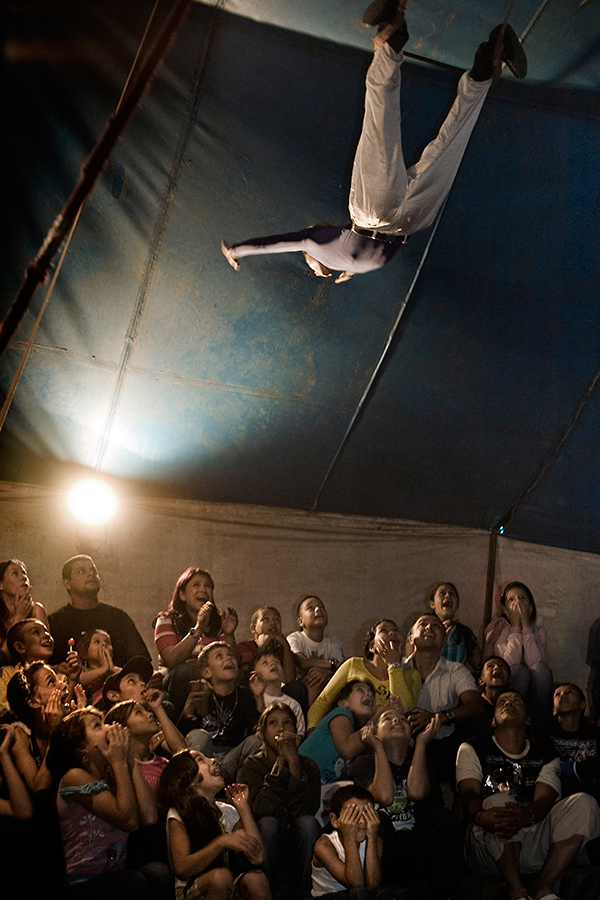
Konig Circus · Barrio Independencias, Comuna 13, Medellín

Jhon Danyer Circus · Barrio Robledo Aures, Medellín 
Raúl sells potato chips at the interval Jhon Danyer Circus · Barrio Robledo Aures, Medellín

Konig Circus • Barrio El Salado, Comuna 13, Medellín 
Jhon Dayer Circus · Barrio Robledo Aures, Medellín

Jhon Danyer Circus · 
Sombrillita Circus ·







 Light Notes · Short Tales